Claire Duncombe

multimedia storyteller : sustainable food systems

Meditations on a Cross-Country Adventure

February and March 2018
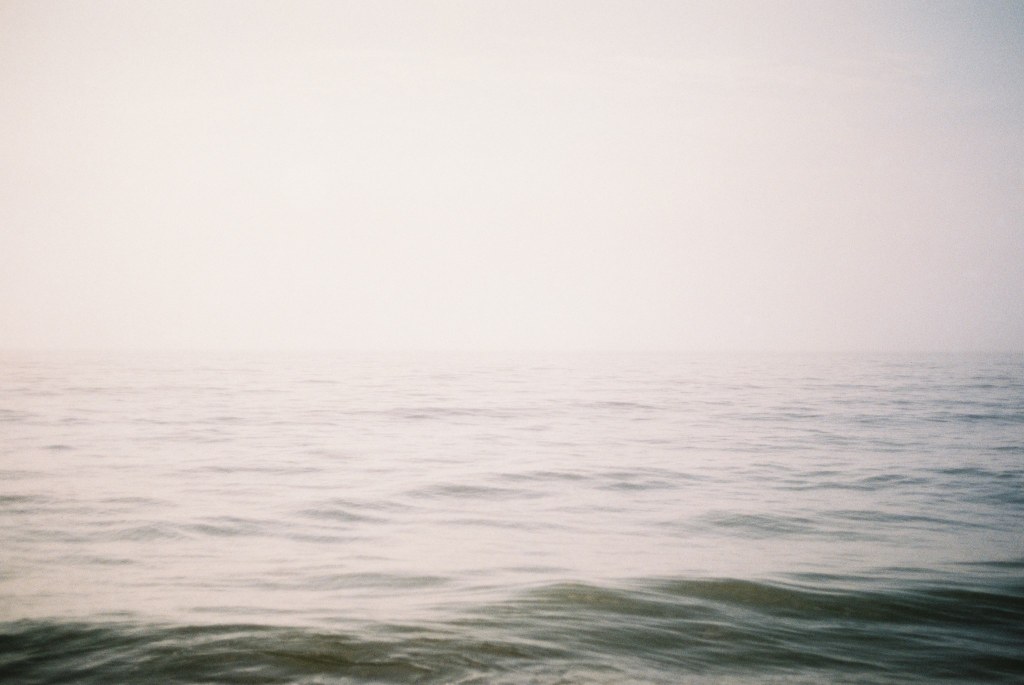
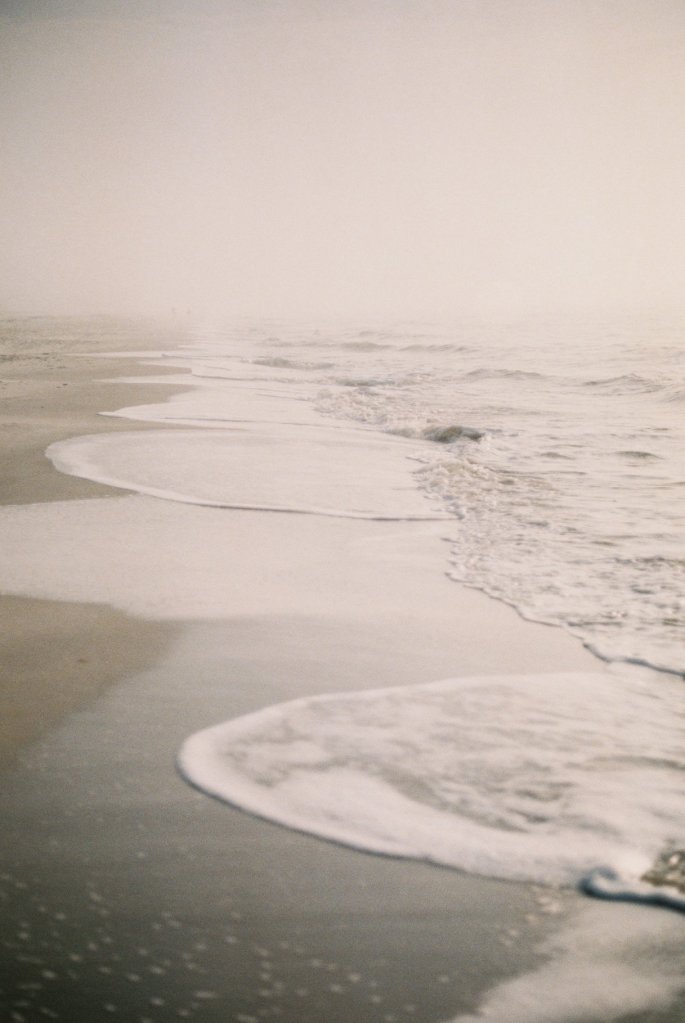
There’s the line. Water against gray. A heavy morning sky still deciding who won last night’s storm. Rain or air? Both together mingle timelessly in this place. The sea is weighed down out over the horizon. It sinks to depths of sand and stone. This is the Gulf of Mexico.
Day 4 in our travels across the country. Already we’ve gone down 2,000 feet to sea level, down through the mountains, the Piedmont and the coastal plain. So now, here, again, the water’s own time. My steps are erased as they should be, only new ground to be walked upon.
Dauphin Island is a bird sanctuary. After flying across the gulf from Central and South America, hundreds of species rest here in this forest, these marshes and dunes. I will never know the gratitude of rest they must feel when they see the green of land and have, themselves, landed on the ground.
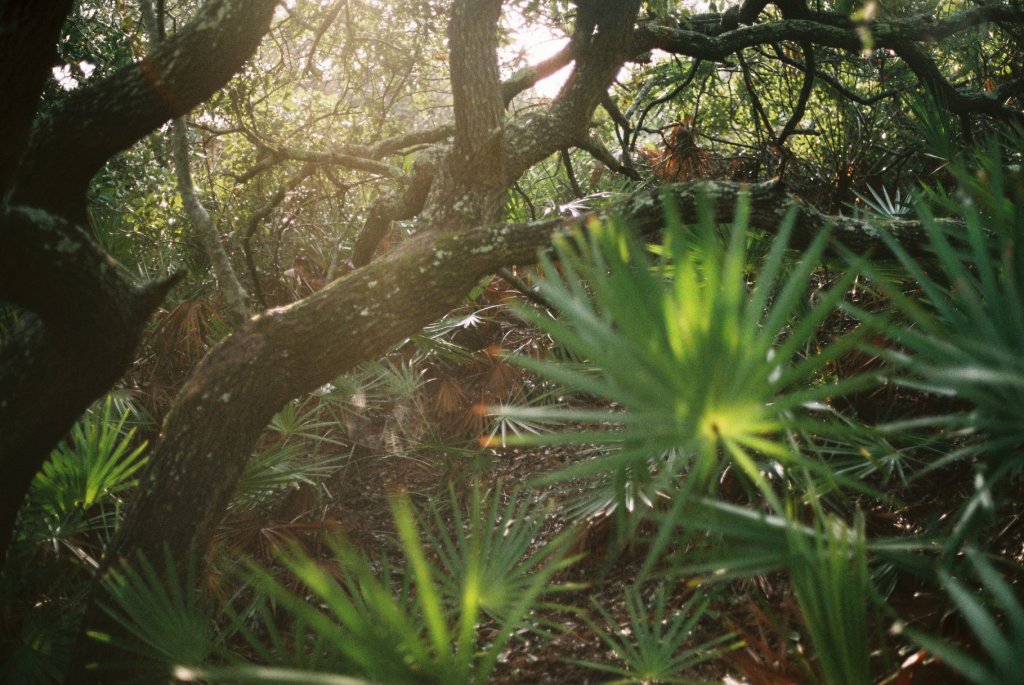
I was still remembering how to focus my lens. There’s a spiderweb here among the saw palmetto and the live oaks. But I rested my view on the tangle of limbs beyond: on the lichen splattered, and the dying, and the green fading off into the light of morning.
I love how these tillandsia live: air plants: all together in clusters of various stages of life, soaking up what comes their way. Here we are two weeks away from where we started, camping by this batholith, a giant domed rock called enchanted by the Tonkawa who lived here.

Enchanted Rock was once one of many domes sculpted over time in this region by the persistence of elements. The other batholiths have now been quarried, carried and molded to build Texan cities. At night the wind whipped threats of a storm that never came. We drove out at daybreak.
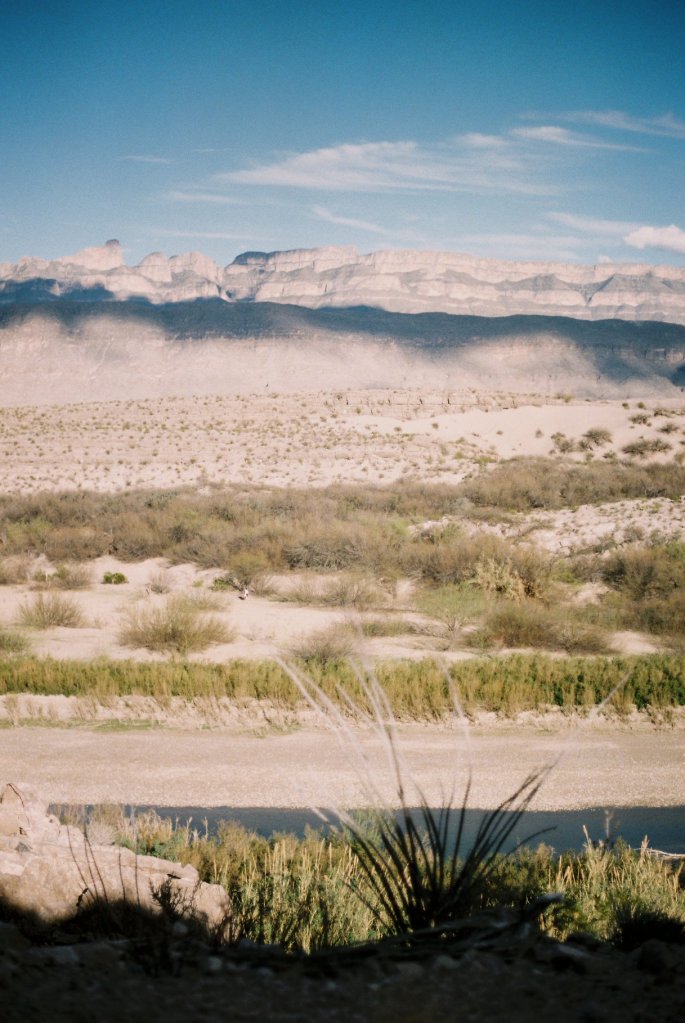
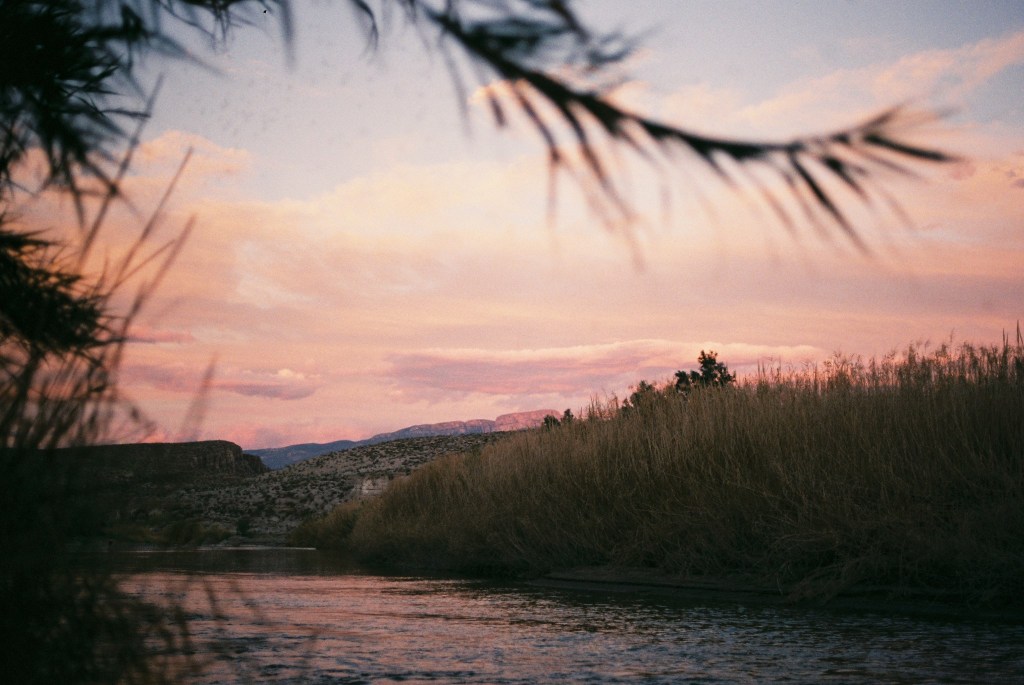
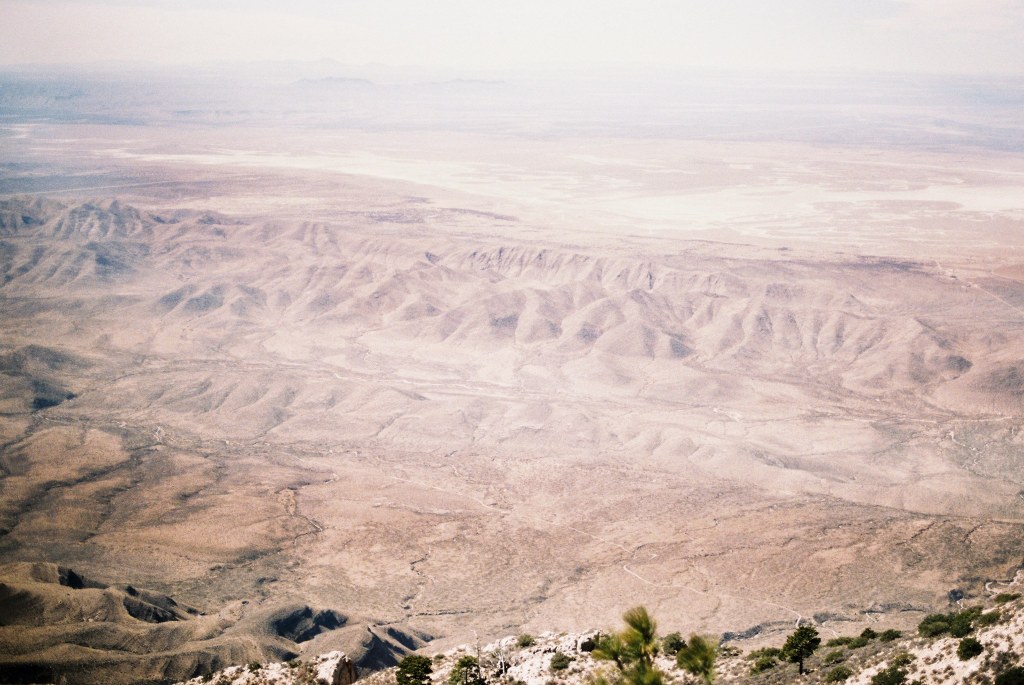
Big Bend is tucked into the southeast-to-northeast bend of the Rio Grande. Tucked in is a kind phrase for a harsh and beautiful landscape. The mountains beyond the shadow are Mexico. It’s an arbitrary line in a land that’s been sculpted for 500 million years. It’s a kind of faith to believe in that time. Here I am stumbling over a quarter century of life and trying to understand the formations of a tucked away piece of earth.
Clouds have little weight, as is the nature of things. As I understand, this was once ocean. Water reached all the way to Arkansas and Oklahoma. Then there was collision, layers of stone and sediment pushed up into mountains, and then, inevitably, there was erosion. What we build is bound to fall. But the sea returned with limestone and fossils before it again retreated. The land rose with compression. It stretched, erupted and cooled. Now it bakes in the sun.
The hot springs were filled with soft silt from a recent flood. We lay next to the Rio Grande as the sun began to descend and the moon followed at a respectful pace. Of course, here, I think about The Wall. I imagine those sun washed cliffs cloaked from view to prove a point of power. People must cross here, I think. But then again, how would I know where and why one route is chosen over another?

We passed a checkpoint on the road south. It was on the returning side. No one bothers to check who might leave. Those who do not belong here, a fellow tourist said as though we’d nod in agreement. As though any of us had room to speak.
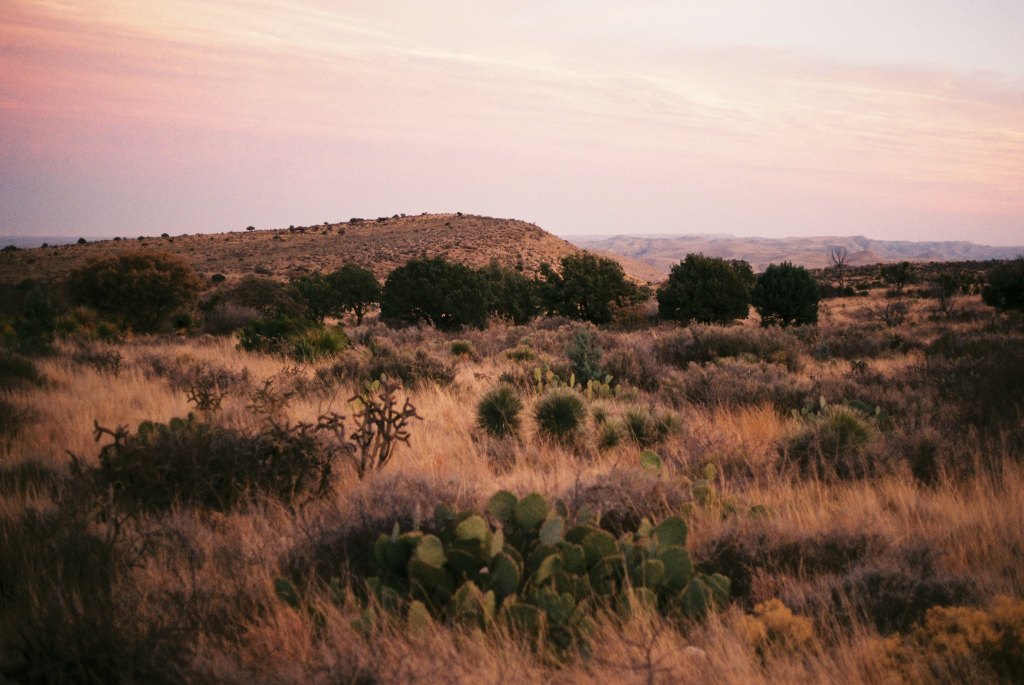
Fast changing twilight made me race on these slabs of a crumbled limestone path. The colors were swelling into dusk at every step, and darkness fell fast against the mountains as they cooled. I normally place my heart at sunrise, but the shadowed mountain against the sky made me feel like a cradled child, completely at peace despite the implausibility of any elongated survival. My words, against those who know the land.
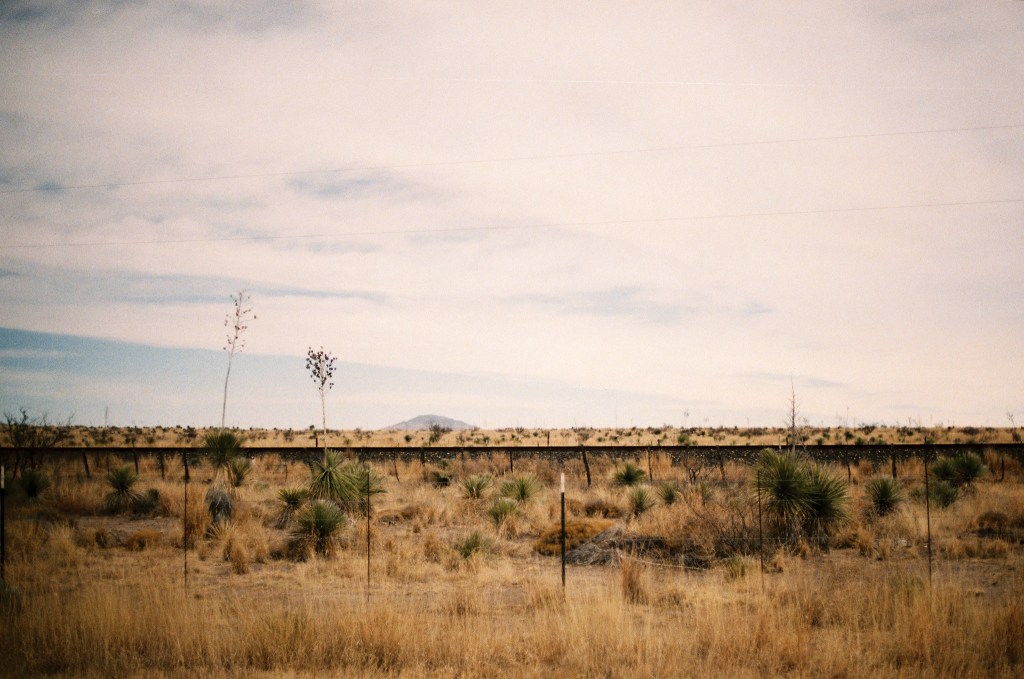
Trains keep time out west. It’s a land you love because of the sky. Is that how to say it? The pressure of mountains held a fraction of my vision in deference to an expanse of blue. The earth is defiant in its lack of need for water. When it rains it pushes back into roads, floodplains and river beds as if to say, only a little is needed here, go ahead and pass it on down the line. Land like this knows nothing of the fences it has been given.
In that vastness of space, my words were swallowed up quickly into murmurs of exclamation that lost volume between thought and speech. To drive this country feels manageable, a hundred miles in a little more than an hour. The mountains start as distant forms, and then they are above, and then we have climbed up and around and are looking back at a view that doesn’t know its own size.
Can you get lost in vision? Sun swept with the wind? I couldn’t stop moving upwards through the turns of the mountain, the squeak of limestone beneath my feet. I often stopped to catch my breath. The elevation gained on me as I moved. 

The Mescalero Apache lived here. Hunted here. Survived here. They escaped the US government here and knew this land. How far can you see against a peak?
We raced across the desert to catch the sunset on these sands. First we saw Texas land that sold for nothing but the pleasure of having no one as a neighbor. Then we ate tacos in El Paso and stared at Ciudad Juarez. Onwards we went past factory farms that filled the air with stench while we tried not to breathe.

These white sands began forming during the time of the Permian Sea. This was when the world was still one continent. And there we stood, catching the end of a geologic tour, where to understand time, the listeners took steps to represent time’s passing. Forty steps for 40 million years and so on.
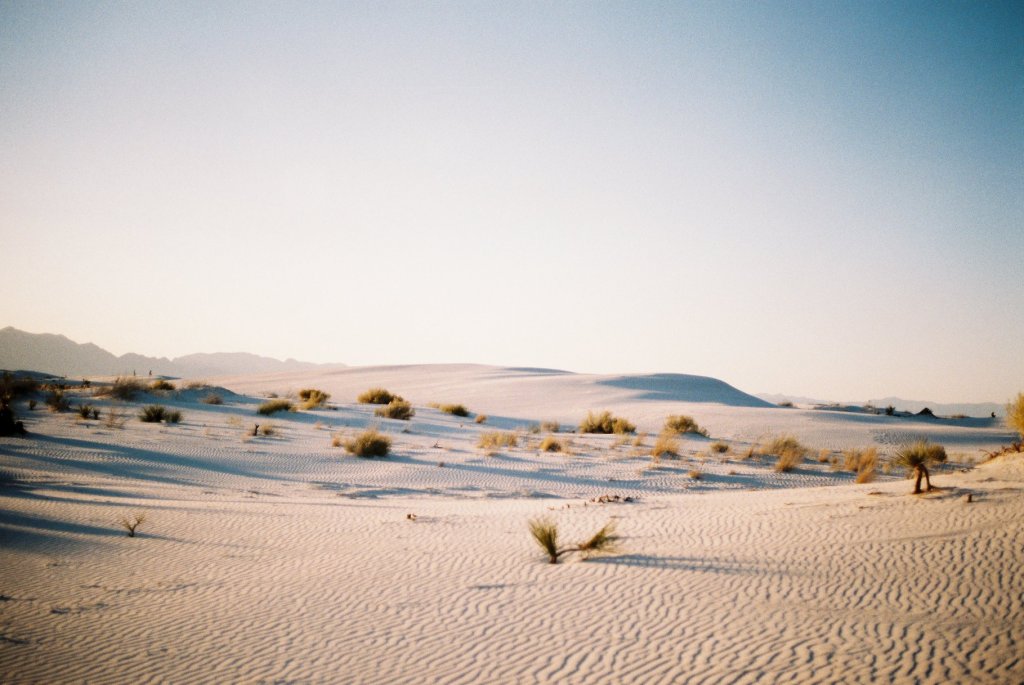
This is gypsum sand, and if you dig down, it holds water. Some of the water is found 12 inches down, and some of it is only 50 years old. Some of the water in these dunes has been here for 6,000 years. Here too, the skunkbush sumac, the rubber rabbitbrush, the Rio Grande cottonwood, the honey mesquite and the creosote bush live among others: purple prickly pear cactus, New Mexico agave, cane cholla, soaptree yucca, Torrey yucca. These systems sustain each other.
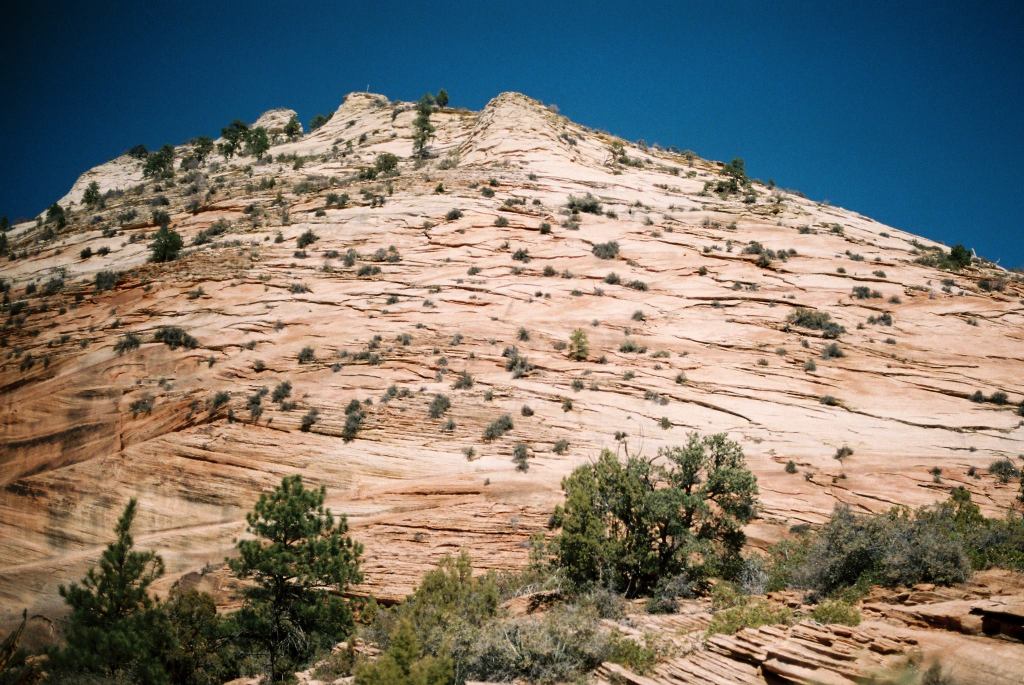
This is the day we drove into the mountains of Colorado. They are maybe what mountains are named for in my mind. The gentle undulation and the jagged peaks, the steep inclines. Trees, snow and grass. This desert land is home to cedar trees and piñon; there’s more yucca and rabbitbush.

Yucca grows differently in the mountains than in the sand dunes. Mountain yucca is “aliofia,” tall and lean. I believe the roots were used for soap and the flower for dye. Rabbitbush: its leaves helped bread to rise, its flowers were used for color, and its stems for baskets. Piñon trees produce nuts every 3-7 years. The sap is used for medicine and waterproofing.
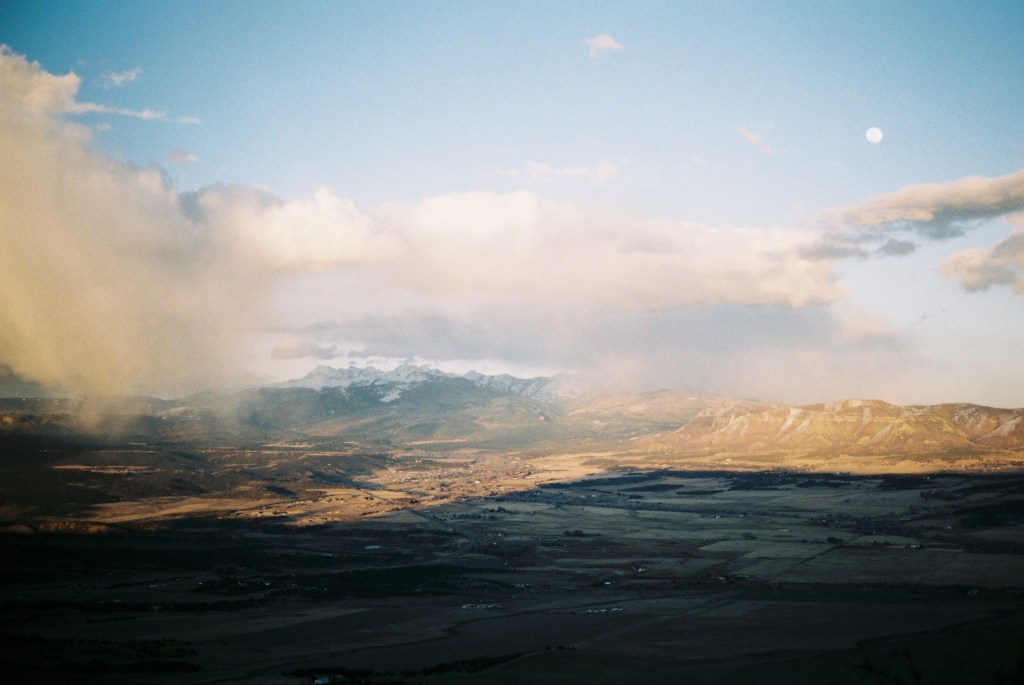
Fleetwood Mac sang “Landslide’ on the radio as we stopped to catch this view. When I associate that song with a place, this is the one, descending from the peaks of Mesa Verde. It’s not comfortable to be among the memories of a place that drove people away. The Anazasi lived here until the rain ceased. Humans can only go so far without the blessings of survival. Yet, here, whispering behind the corners of your eyes, you know it’s still a home.
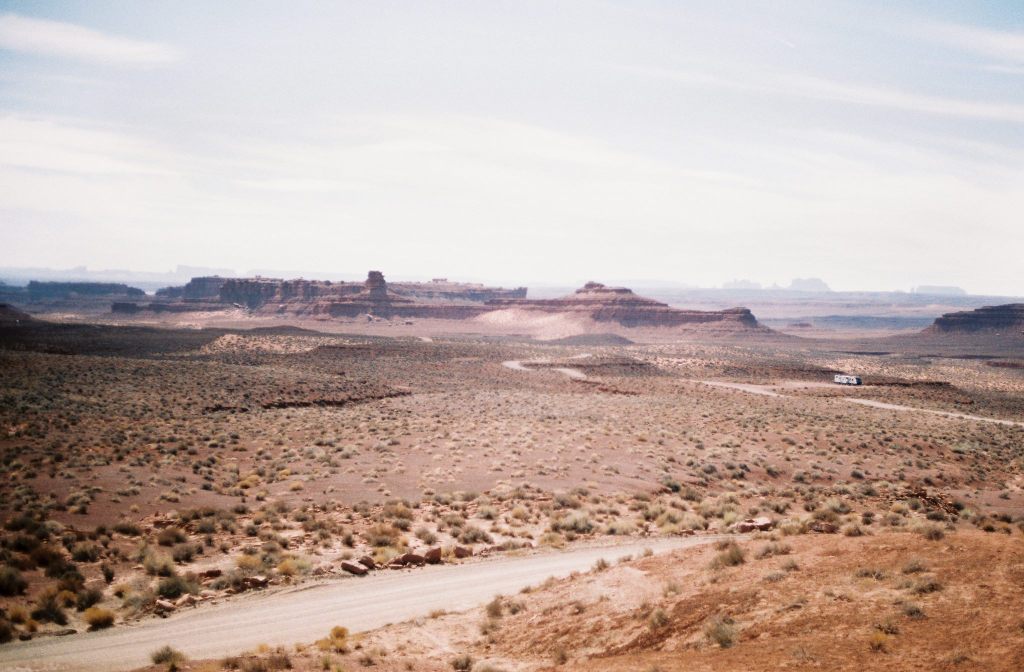
The Valley of the Gods is cloaked in red sand and stone. You can hear the cars as they come through, see their trails of dust and gauge their speed. There is one lone RV in this photo. It looks larger than it is in this scape. This is BLM land, Bureau of Land Management. Here you can camp for free–pack in and pack out. It’s a wonder that you can still find space to be alone out here. For in truth, for all its wildness, for all my photos of nobody, people were around the corner.
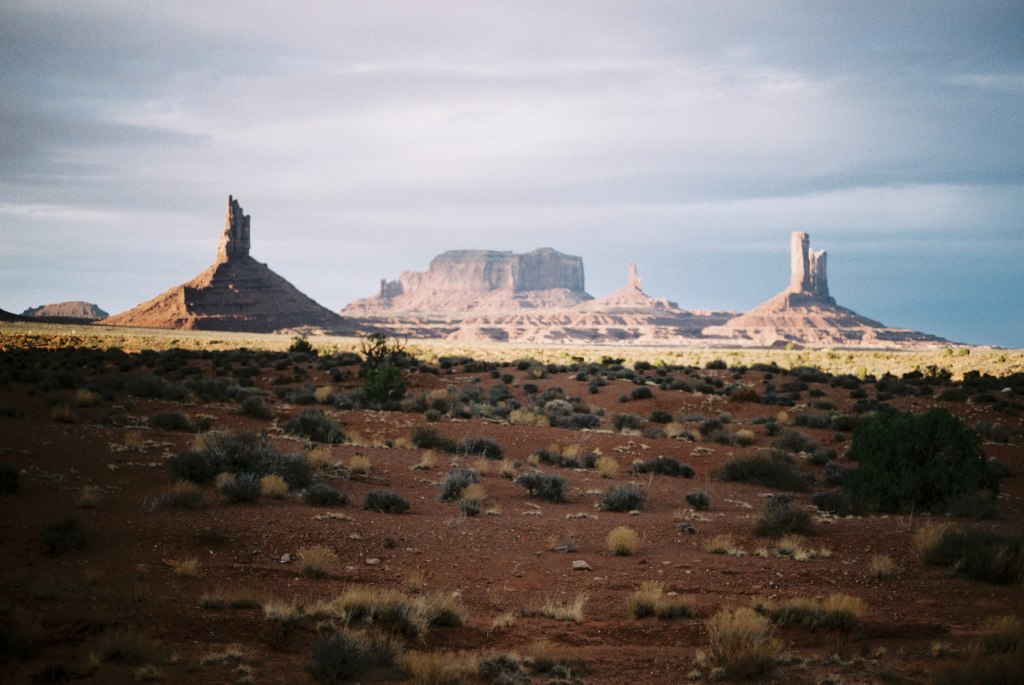
Navajo land. We heard it on the radio before we arrived, listening to nuances of a language we didn’t understand but whose cadences are pleasing. There are rules to followed and remembered. Even the sound of too many people can disrupt these buttes. They’re in the last stages of erosion. They are returned to the earth, from plateau to mesa to butte, little by little, with rain and wind.
Water. I didn’t write it down, but I believe at one point water was held underneath this sandstone ground. There was enough for planting corn and other crops. I was amazed that people could read this space in that way. When I think about growing, I think about green and about rain. But now, 40 percent of the Navajo Nation doesn’t have water. Some think that’s just fine; that’s how they’ve always lived. Or they don’t trust running water, contaminated by uranium mining nearby. Who gets the water as more tourists arrive?
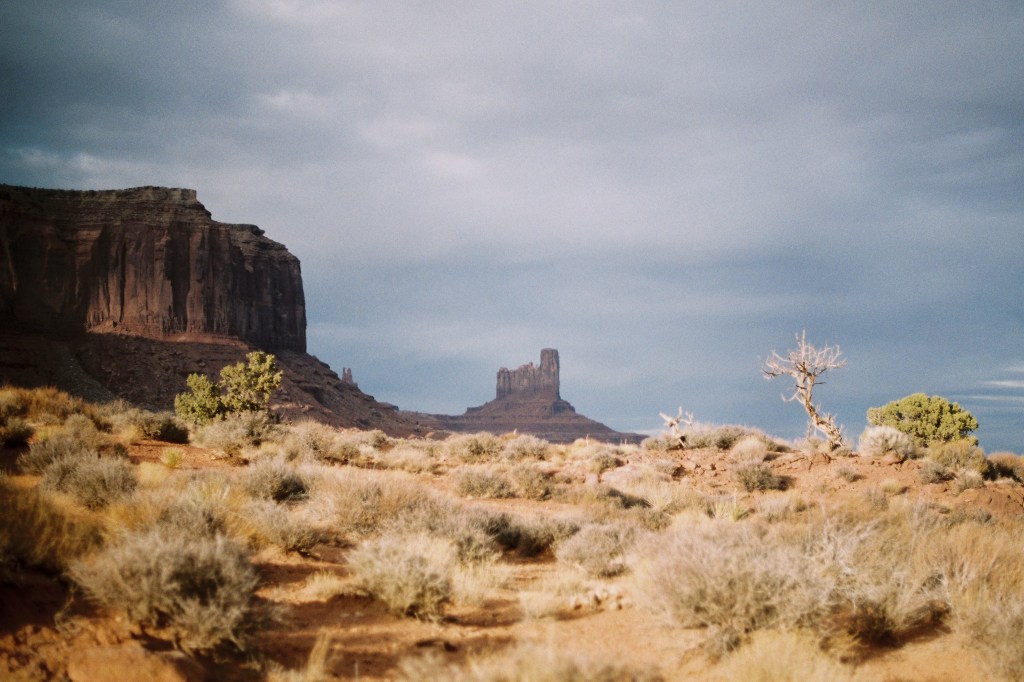
The light doesn’t splinter here; it glows and expands. It passes and pauses the eye: here the sagebrush, there the cliffs. What’s perspective in this landscape sculpted by sea? If I knew, I could read the layers of time written without words and beyond my understanding of the space between minutes. What is my lifetime to these mountains? Pebbles spilled. And isn’t that the way it should be?
I walk every day on land that isn’t my own. I’m landless, drifting. Is your soul in the land where the earth has become home to your family? We are guests here. This is sacred land. I know this, but where do you draw that line? Why must it be the sand and not the dirt by the highway?
Zion is beyond beautiful, and everyone knows it. That’s why the valley is filled to the brim with cars and hikers with walking sticks. RVs mostly. Those who can afford to be reckless in their travels. Again, here is a line. This land should be for everyone, but is internet-famous the same thing? What does it mean to come to a beautiful and ancient space and take a photo of yourself looking stoic, in the midst of mindful yoga, making a funny face? What depth is lost in the making of a novelty?
We took a moment to get lost in the desert, climbing up boulders and around them. This was four days before I headed home. We were in California. I was happy to be there in the present day, in a car with a tank full of gas and not out of history in a wagon, months into traveling to the promised land–only to end up lost in this desert.
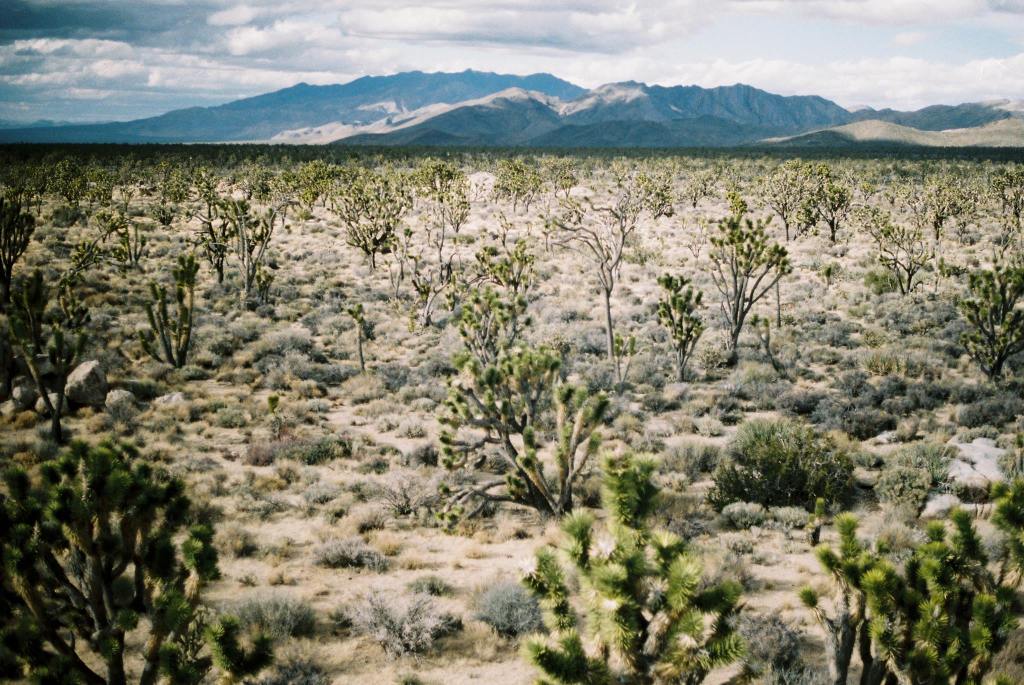
Joshua trees are yucca plants. The same plant family we followed from the bottom of Texas, through New Mexico, up to the mesas of Colorado across Utah and down. Here they stretch their own city of souls, dancing with the shadows of clouds and learning patience from the sun.
I love the lone one’s silhouette. The way it thrives here in conversation with the sky. I love when wind seems to blow right through my ears and up my spine, soaking me in silence. That’s what I drink so far out west. The silence that makes my hands swim through space and my eyes water as I listen to nothing for a little while–until a car passes or a plane flies. Nothing I say is greater than the quiet.
There’s the line. Water against sky. My first thought of the end was a breath. I put as much trust in nature’s structures themselves as the people who remind me to lower to my voice to a whisper. To listen and respect. Laughter is allowed in prayer as is wonder.

Claire Duncombe

multimedia storyteller : sustainable food systems